
How to Prevent Mission Creep in Your Nonprofit (Reconnect with Your "Why”)
A nonprofit is nothing without its mission. It’s more than just a statement–it’s meant to guide everyone and everything that happens in the nonprofit. It’s supposed to instill a sense of purpose within the leaders and staff, each person working towards the same goals. It’s the glue that holds everything and everyone together.
But what happens when an organization is no longer anchored to that mission? It can feel like trying to eat soup with a fork or using a desk as a chair.
I’ve seen this in the sector over and over again–people get into the thick of the work and start to expand their reach beyond the original mission. It’s not always obvious. Usually, it happens little by little, each action moving the organization further away from its North Star, or its Why.
How Does Mission Creep Occur?
There are several reasons why mission creep can happen:
A nonprofit experiences some success, which inspires employees to try to do everything and help everyone
Donors push their own interests and sway a board away from the nonprofit’s mission over the promise of funding
Reactionary behavior to a crisis
Different staff members have different ideas of what should be focused on
Some nonprofits will mold their mission to suit a grant or funding opportunity
Whatever the reason, mission creep is often harmful–not always, but we’ll get into that a bit later–to nonprofits, even if people are acting with good intentions.
Why Mission Creep is Harmful
Simply put, if your nonprofit focuses on activities and initiatives that don’t advance its mission, it wastes precious time, energy, and money. Staff members end up diluting the efforts that are focused on the mission and minimizing the positive impact they’re making on the people and communities that they serve. Not to mention, many nonprofits are already limited in terms of access to resources–mission creep only exacerbates this issue.
Your staff members who believe in the original mission could become disillusioned with the work they’re doing if it’s for the advancement of some other goal. Employees can even experience burnout from a lack of purpose and direction in their work, whether they’re overworked or not.
Moreover, if donors and the general public see that your nonprofit is no longer serving its original mission, the reason for supporting your nonprofit in the first place, they will end up giving money to other organizations instead. Your nonprofit’s reputation will likely suffer as well.
How to Prevent Mission Creep (or Re-connect with Your “Why”)
1. Be Clear in Your Mission
Make your mission crystal clear and easy to understand. Don’t be afraid to take your time with it–rushing through it won’t do anyone any good. Remember, it’s more than just a sentence. It reflects everything you’re working toward and guides every action.
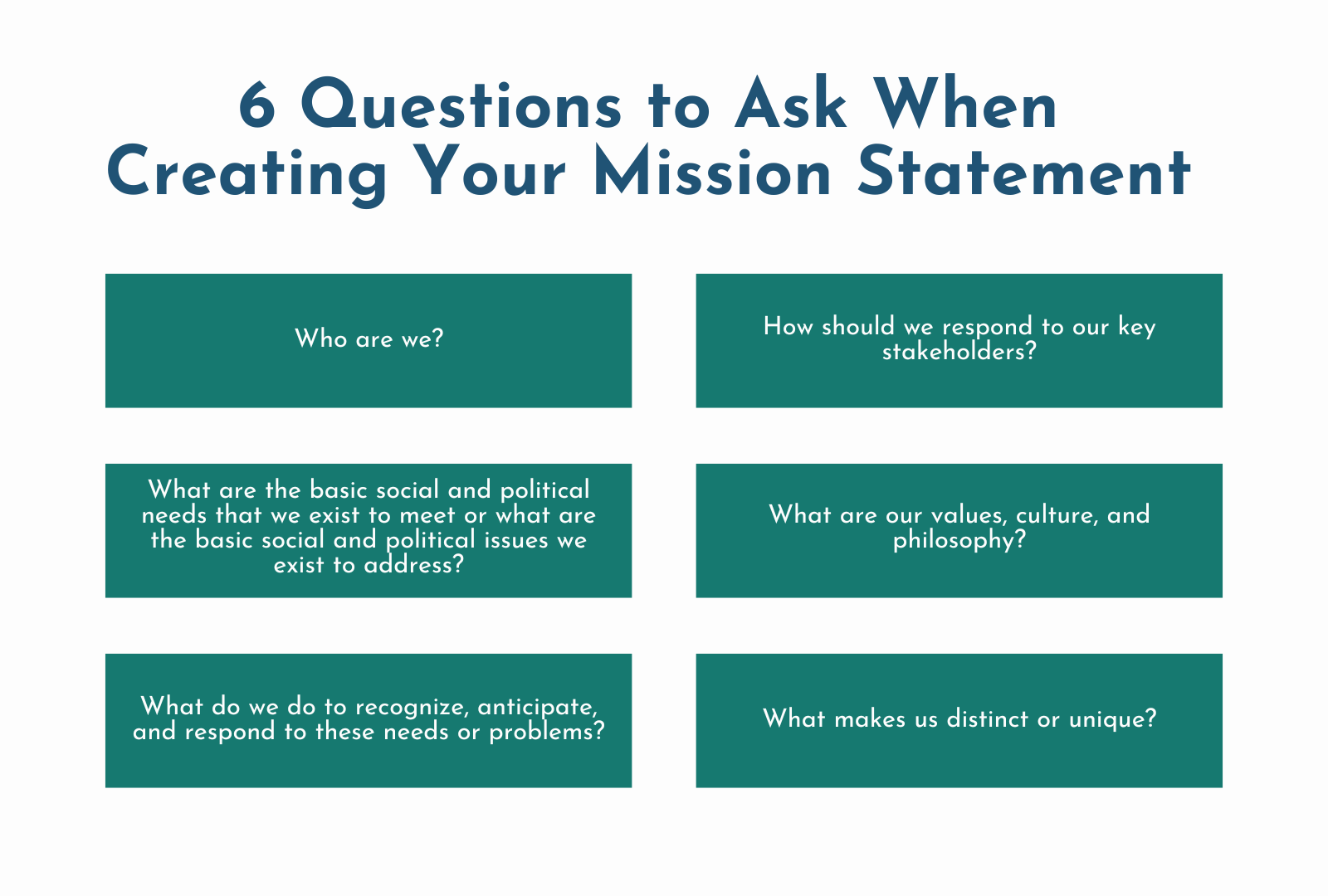
When I work with clients, I give them six questions to ask themselves to create their mission statement.
1. Who are we?
2. What are the basic social and political needs that we exist to meet or what are the basic social and political issues we exist to address?
3. In general, what do we do to recognize, anticipate, and respond to these needs or problems?
4. How should we respond to our key stakeholders?
5. What are our values, culture, and philosophy?
6. What makes us distinct or unique?
Even if you have a mission statement already, you can use these questions to re-evaluate it and ensure it’s perfect.
Having a good mission statement is part of building a solid foundation. If you have a wobbly, half-assed foundation, building on top of it will become that much more difficult.
2. Use Your Mission Like a Compass
Have you written down your mission statement and just set it aside, like an item on a to-do list? Or do you use it strategically and intentionally holistically throughout your organization? Obviously, I’m a fan of the latter.
When you come across an opportunity for nonprofit growth, ask yourself if aligns with your mission and end goal. If the answer is yes, go for it. If not, time to move on to the next thing.
3. Write it Down
Write it down and make it something you can see with your eyes rather than a statement that just lives quietly in your head. Your mission statement should be everywhere: your employee handbook, wall art, your website, etc. Putting it on tangible materials can help bring the mission to the forefront of everyone's minds and inspire action driven by your mission.
4. Revisit and Reevaluate Your Mission
It’s a good idea to revisit and reevaluate on a regular basis.
Ask yourself, do people still need the services and help that you provide?
Are your mission and vision aligned? Often their ultimate vision (future state) and mission (how we'll get there) do not line up.
Can you and your staff recite the mission statement? I've worked with companies where the staff doesn't even remember their mission statement or repeats a statement that differs from the original. This means that they're putting the wrong message out there to beneficiaries, donors, and the general public.
Is your mission statement too long? A long mission statement makes it difficult to recite and remember off the bat. Mission statements need to be brief and clear.
Are you still focused on your original purpose?
These questions can help you make sure you’re making the greatest impact in your community or communities.
5. Hiring an Outside Consultant to Help
Sometimes we're too close to our organization to effectively look at it through another lens. Working with an experienced consultant that understands nonprofits can help you find clarity and see your nonprofit’s opportunities and challenges with fresh eyes.
When “Mission Creep” is a Good Thing
When a nonprofit intentionally strays away from its mission, it’s no longer mission creep. As long as you’re being strategic and making this decision with the input of multiple important stakeholders, it can be a much-needed change for the organization.
March of Dimes is a great example of a successful and healthy change of mission. It was originally formed to address polio but re-evaluated its mission when a vaccine nearly eradicated the disease. It assessed its existing resources, strengths, and partnerships to redefine its mission. Today, March of Dimes’ mission is “to lead the fight for the health of all moms and babies”.
Another example is Focus: Hope which provides a wide range of social services and job training. They started to lean too heavily on housing which was only a part of their original mission. The solution was to spin off a senior housing property initiative and delegate the program to a newly formed 501(c)(3).
Mission Creep in Nonprofits Run by Marginalized Communities
I recently came across an interesting article by Nonprofit AF that looks at mission creep through the lens of nonprofits led by marginalized communities. Many of these nonprofits often have broad missions because they’re responding to the vital needs of the community that, unfortunately, can’t get the help they need from other organizations due to a “lack of trust or lack of cultural responsiveness”.
For these nonprofits, to determine the validity of a program or initiative, they may ask themselves “screening” questions that reflect a different way of thinking about mission creep:
“Is this effort outside our individual mission but is something we need to be engaged in for the collective good?”
“Is this effort not something we would normally be engaged in, but it is needed and it seems no one out there is willing to lead on it or have the capacity to do so?”
“Is our stated mission still relevant? Would this new program/collaboration be a form of mission creep, or would the inclusion of it make our mission more responsive to community needs?”
Does Your Nonprofit Need to Find its Why Again?
Nonprofits should always assess whether their initiatives and programs serve the needs of their beneficiaries and are making the greatest impact possible. As a general rule, nonprofits’ missions should be focused enough to make a tangible impact, but sometimes changing or broadening your mission is needed, as long as it’s a team effort done in a strategic manner.
If you feel like mission creep is “creeping” up in your nonprofit or that it’s already happened and you need to get back on track, ark nonprofit consulting can be your helping hand. We specialize in strategic planning and can give you a fresh perspective on your nonprofit as a whole.