
10 Common Reasons Why Nonprofits Fail
In my work as a consultant, I often talk to folks in the sector about why nonprofits fail….
Data from the National Center on Charitable Statistics reveal that approximately 30% of nonprofits fail to exist after 10 years, and according to Forbes, over half of all nonprofits that are chartered are destined to fail or stall within a few years due to leadership issues and the lack of a strategic plan, among other things.
That doesn’t paint a pretty picture. We know many fail…but why do they fail? Let’s dive into the most common reasons.
1. Too much dreaming, not enough strategizing
Do you remember what you dreamed of when you were a kid? Whether you dreamed of being an astronaut or a rockstar or a ballerina, the only way those dreams would turn into reality is if you created an actual strategy (then built a plan to execute that strategy). The same goes for running a successful nonprofit that truly changes the world for the better. Dreams are where everything starts, but you need real action if you’re going to create positive outcomes for people.
If you need help building a strategy and need to leverage outside expertise, work with a nonprofit consultant.
2. Straying away from the original mission
It doesn’t normally happen all at once, but when nonprofits don’t have a well-thought-out business strategy, it can move bit by bit, unintentionally in a different direction. You don’t notice anything’s amiss at first, but you keep taking little steps away from your North Star and end up somewhere totally different.
For example, your nonprofit keeps chasing wealthy donor after wealthy donor while neglecting to develop quality programs that will actually make a difference to the people you wanted to help in the first place. Or maybe your nonprofit is trying to be too many things to too many people.
This doesn’t mean that a nonprofit should never change. It’s perfectly normal to do so as long as there are legitimate reasons for it and you consider the input of important stakeholders and board members.
3. Focus too much on spending rather than impact
We all know that nonprofits need money to make an impact. Because being underfunded is an unfortunate reality for so many nonprofits, it can be easy to fall into the trap of focusing too much on spending. Money is easy to quantify so even reputable organizations like Charity Navigator will use overhead costs as a measure of how well a nonprofit is doing, but low overhead costs don’t necessarily equate to greater impact.
So how can we measure impact when it’s notoriously difficult for many nonprofits to do this successfully? Thankfully, it’s not an impossible task. Candid outlines three steps to measure impact:
1. Build a logic model
Impact: What measurable change are you striving to achieve in the long-term?
Outcomes: What measurable change are you striving to achieve in the short-term? What would indicate that you are progressing toward your goal?
Outputs: What tangibles can you measure immediately?
Activities: What high-level steps are required to run the program?
Inputs: What resources (staff, money, technology, etc.) does the program require to be successful?
2. Determine the need for measurement
Are you measuring for management or strategy?
3. Collect the data
Qualitative: Narratives on attitudes and feelings
Quantitative: Raw numbers
4. Failure to invest in vital organizational infrastructure
As mentioned above, nonprofits that don’t invest in infrastructure–such as fund development personnel, capacity building, professional development for staff, IT systems, legal support, and more–are more likely to fail than those that do. What exactly happens when there’s a lack of vital organizational infrastructure?
Missing out on opportunities
Too much cost-cutting
Poor workplace culture and environment
Lesser impact on beneficiaries
Lack of investment from external stakeholders
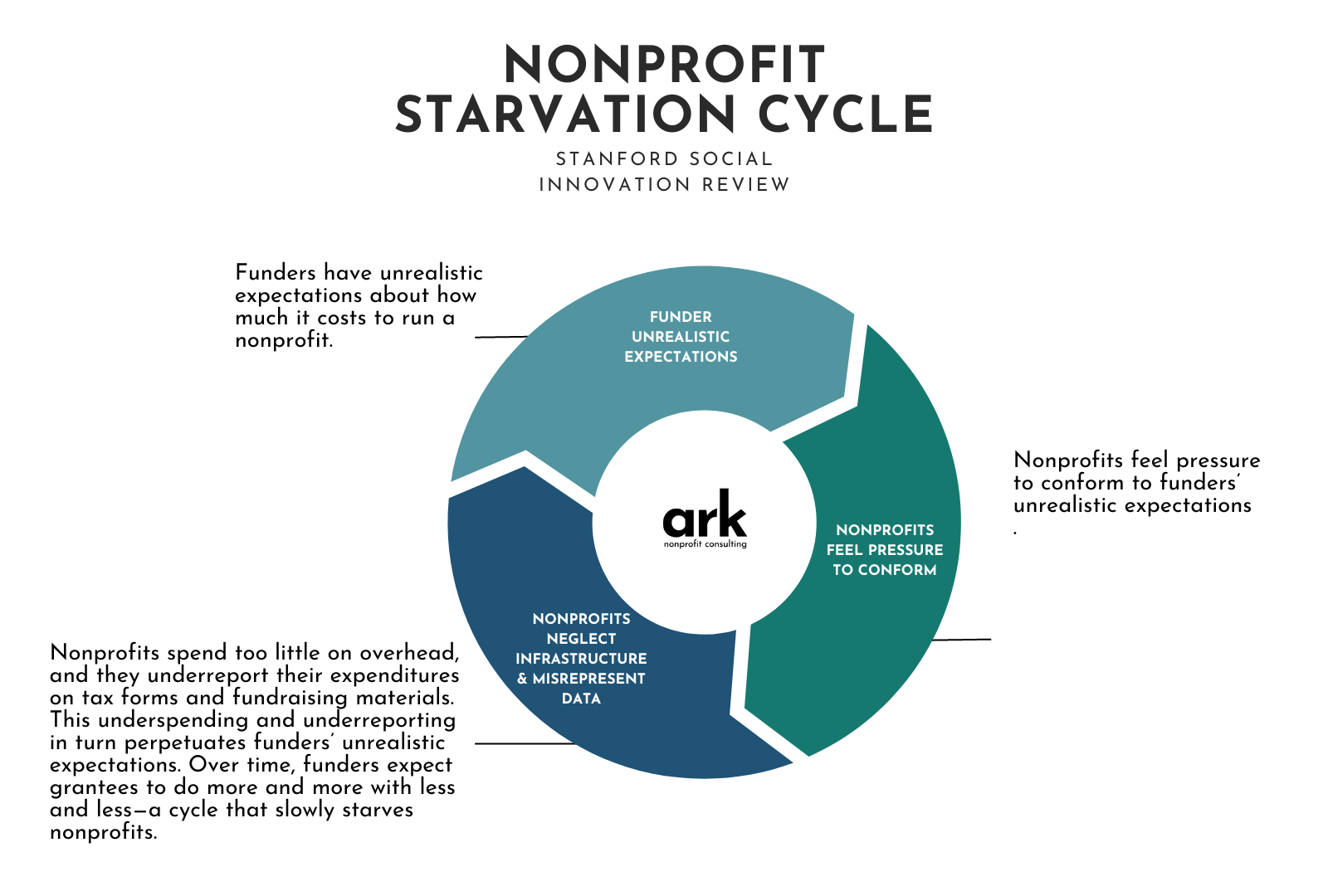
According to the Stanford Social Innovation Review, the Nonprofit Starvation Cycle fuels the persistent underfunding of overhead:
Funders have unrealistic expectations about how much it costs to run a nonprofit
Nonprofits feel pressure to conform to funders’ unrealistic expectations
Nonprofits respond to this pressure in two ways: They spend too little on overhead, and they underreport their expenditures on tax forms and in fundraising materials. This underspending and underreporting in turn perpetuates funders’ unrealistic expectations. Over time, funders expect grantees to do more and more with less and less—a cycle that slowly starves nonprofits.
The sector’s general attitude to spending on infrastructure and overhead is changing, with some experts saying that nonprofits may need to spend about one-third of their budget on overhead, but there’s still a long way to go in this regard.
5. Fear of innovation
The world is in constant flux. If your nonprofit doesn’t change with it, it will die, or at least remain stagnant and make little impact. If you’re afraid of investing in new technology and adopting new ways of working, you won’t create the impact that people need. Don’t want to get creative with your marketing strategy? Are you ok with a cumbersome donation payment system? Afraid to restructure your organization even though you need to?
We get it, nonprofits don’t have much room for failure, which makes it difficult to get creative and do things differently. Taking risks may be scary, but what’s even scarier is doing the same thing over and over again hoping for better results.
6. Founder’s syndrome
It all starts with one person, but one person doesn’t have the skills, experience, or perspective to do it all. When founders are unable to let others help them run the nonprofit, it will start to crumble. Holding a disproportionate power and influence over its people and decisions is simply not sustainable. It’s the perfect recipe for burnout.
A nonprofit suffering from Founder’s Syndrome will also have a hard time cultivating new ideas as well as attracting and keeping volunteers and staff. No one wants to be a part of a culture that revolves around one person rather than the mission.
A founder should be passing responsibilities onto multiple people as the organization grows. Also, they should be open to hearing different perspectives and implementing different changes. This isn’t a one-and-done event, but something that’s in constant flux as the organization changes. Teamwork and a strong network are what allow a nonprofit to thrive in the long-term.
If you’re a founder, step back and take the time to reflect on your role at your nonprofit. Is it suffering from founder’s syndrome, or do you foresee it potentially developing in the future? Don’t be afraid to ask your staff for feedback or enlist the help of an expert.
7. Failure to collaborate with other nonprofits
Hot take: the “competition mindset” is one of the biggest problems in the nonprofit sector. It might be tempting to look at other nonprofits focused on similar issues as competition, but the fact is, everyone can benefit from more collaboration among nonprofits.
By teaming up with a nonprofit that’s working toward a similar mission or helping similar communities, all parties can go further, facing fewer obstacles. The benefits of collaborating with other nonprofits include:
Save on administrative costs
Strengthen brand awareness among the public
Improve the quality of programs and services
Expand your range of programs and services
Make a greater impact on communities and broader systems
Foster new ideas
That being said, you should do your due diligence before partnering up with any nonprofit. Conduct thorough research and have in-depth conversations with the key individuals in the nonprofit(s) that could potentially become your partner.
8. Poor financial planning
Hoping people will donate to the cause or wealthy benefactors will come to your aid won’t provide the stability you need. Without a financial strategy, nonprofits are guessing or using their feelings to guide them on how to generate income, deciding how much will be spent and on what, and choosing which activities will create the most impact. It’s like shooting a target blindfolded, hoping you’ll get a bullseye.
Your nonprofit financial plan should include:
A detailed analysis of your budget for several years into the future–this could always change but you need a starting point
Sources of revenue–make sure you have diverse funding sources
Use of expenses–build your infrastructure!
Projected cash flow requirements–monthly and annually
How to maintain transparency with stakeholders regarding your finances
Every nonprofit can do this–from small organizations with limited funds to big organizations that have global influence.
If you run a small nonprofit, a tool I would recommend to get you started is QuickBooks, which is software to help you with accounting and managing finances. You can get a discount if you purchase it through TechSoup.
9. Trying to do everything
Why put 10% of your efforts into ten things, when you could put 100% into one thing, or 50% into two things? It makes me think of this simple diagram in Greg McKeown’s Essentialism: The Disciplined Pursuit of Less:
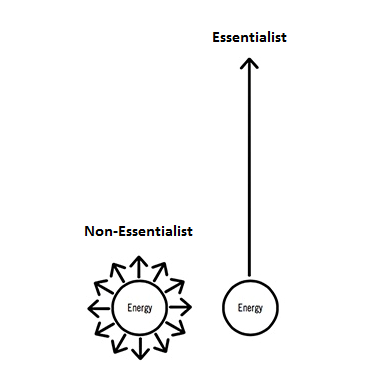
By focusing your efforts on what really matters, you’ll be leaps and bounds more productive and impactful in your work. Not to mention, your team will avoid burnout. If you’ve never experienced burnout, trust me, it’s fucking terrible.
If you’re trying to do everything in your nonprofit, it’s very likely that you don’t have a clearly defined strategy and mission. First, get clarity on your mission, your North Star. Then do some research and analysis about where you can create the most impact for your beneficiaries.
10. Lack of diversity (demographic and expertise)
When executives, employees, board members, volunteers, donors, and other stakeholders have a wide array of backgrounds and lived experiences, they bring unique perspectives that influence how the nonprofit approaches its mission in more inclusive and innovative ways. With unique individuals working together toward a common goal, it can spur a myriad of positive outcomes in nonprofits, such as:
Improved quality of decision-making
Encourage people to be more creative, more diligent, and harder-working
Enhanced innovation
Better connection with the communities they serve and understanding of their needs
Better networking
When a team lacks diversity, it will likely remain as such in perpetuity, even if people are well-intentioned. There must be a concerted, ongoing effort to foster a diverse and inclusive environment, starting at the top. Nonprofit leadership teams and boards must see diversity as part of the organizational DNA, rather than just a siloed-off initiative or program with a checklist.
If you fail to plan, you plan to fail…
That’s quite a lot to consider to ensure your nonprofit is a success. If it was easy, it wouldn’t be worth it–it’s what makes this crazy journey both exciting and scary. If you need guidance on making sure your nonprofit maximizes impact while creating a healthy workplace, let’s start a conversation. We’re here to empower and support you in your mission for social change.